
Insights for work and life.
From PR to Singapore Citizen: The 24-36 Month Journey (2026)
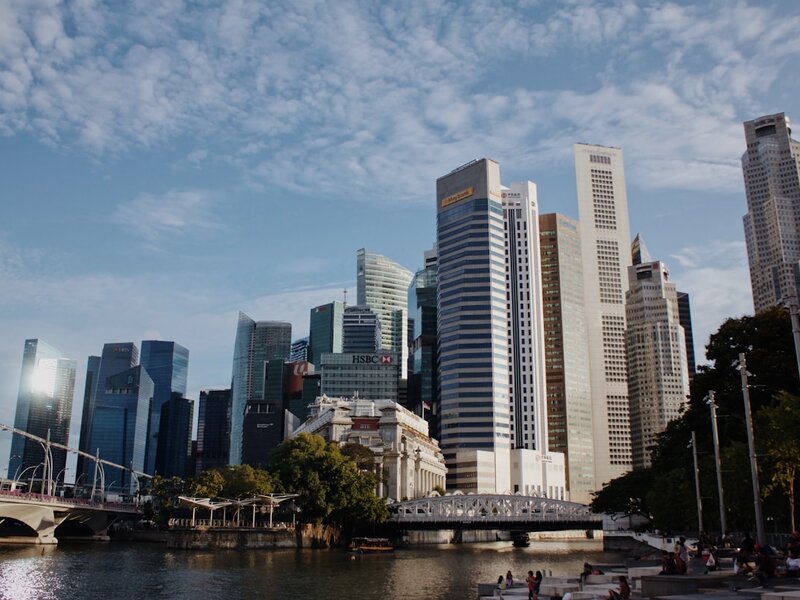
The Singapore citizenship journey — from the day you submit a citizenship application as a Permanent Resident to the day you take the Oath of Renunciation, Allegiance and Loyalty — typically runs 24 to 36 months for adult applicants, and the path is more structured than most Permanent Residents realise. The Immigration & Checkpoints Authority (ICA) controls the timing; the applicant controls how prepared they are when each gate opens.
This article walks the entire Singapore PR to citizenship pipeline as published on the ICA website (last updated 13 March 2026), through eligibility, the in-principle approval stage, the mandatory Singapore Citizenship Journey programme, the National Service implications for sons, the renunciation of original citizenship, and the practical decisions a family needs to make along the way.
Who is eligible for Singapore citizenship application in 2026
Per the ICA citizenship eligibility rules, you are eligible to apply for Singapore citizenship if you fall into one of the following categories:
- You have been a Singapore Permanent Resident for at least two years and are aged 21 and above (you can apply together with your spouse who is a PR and any unmarried children aged below 21 born within the context of a legal marriage to you, or legally adopted by you).
- You have been a PR for at least two years and have been married to a Singapore citizen for at least two years.
- You are an unmarried child aged below 21 born within the context of a legal marriage to, or legally adopted by, a Singapore citizen.
- You are a PR studying in Singapore, have been residing here for more than three years (of which at least one year as a PR), and have passed at least one national exam (PSLE, GCE ‘N’/ ‘O’/ ‘A’ levels) or are in the Integrated Programme.
- You are a PR and an aged parent of a Singapore citizen aged at least 21.
The two-year-PR-plus-21-and-over route is the most common adult pathway. The two-year-married-to-SC route is the most common spouse pathway. For the broader pathway map covering how applicants reach PR in the first place, see our Complete Singapore PR Pathway Guide 2026.
The Singapore citizenship journey timeline: what happens month by month
Months 0–3: Application submission and initial review
Submit the application via the ICA e-Service using Singpass. The submission fee is S$100 per application. ICA will conduct initial document checks and may request additional supporting documents — certified true copies of originals plus official translations for any document not in English. Common gaps at this stage are missing employment letters, incomplete tax history (request transcripts from IRAS in advance), or unverified family-relationship documents from overseas civil registries.
Months 4–18: Holistic assessment
This is the longest and least visible phase. ICA assesses the application against the holistic framework: family ties to Singaporeans, economic contributions, qualifications, age, family profile and length of residency. There is no portal that reports progress; checking status via the e-Service simply shows “application under review” throughout. Avoid speculation and avoid resubmitting documents unless asked.
Approval probabilities at this stage track the same factors that drove the PR application, weighted differently. We discussed those factors and salary-band patterns separately in realistic Singapore PR approval odds by salary band; the citizenship version of the same assessment generally raises the bar on demonstrated integration and length of residency.
Months 18–24: In-principle approval (IPA) and the Singapore Citizenship Journey
If approved, ICA issues an in-principle approval letter. From this point, applicants aged 16 to 60 must complete the mandatory Singapore Citizenship Journey programme within two months. The programme has three components:
- e-Journey — an online learning module covering shared values, civic responsibilities, society and way of life, arts and culture, history, national symbols and aspirations.
- Singapore Experiential Visit — a half-day in-person event taking new citizens to key historical landmarks and national institutions.
- Community Sharing Session — a constituency-level session where new citizens meet residents and community volunteers and reflect on their journey.
The Singapore Citizenship Journey programme is administered by the People’s Association in conjunction with the Ministry of Culture, Community and Youth (MCCY). Failure to complete within the prescribed window can delay or invalidate the in-principle approval — treat the two-month deadline as firm.
Months 24–30: Renunciation of foreign citizenship
Singapore does not allow dual citizenship for adults. Once SCJ is complete and other formalities cleared, ICA will require you to renounce your existing citizenship and produce documentary proof from the issuing country (renunciation certificate, cancelled passport, or equivalent depending on the country). Renunciation timelines vary widely by country — some countries process within weeks, others take many months, and a small number make renunciation procedurally complex. Plan this early; do not assume the calendar is in your control.
Months 30–36: Oath, NRIC, passport
Once renunciation evidence is accepted, you take the Oath of Renunciation, Allegiance and Loyalty. ICA collects S$70 for the Singapore Citizenship Certificate and S$10 for the Singapore identity card (NRIC) for new citizens aged 15 and above. After NRIC issue, you can apply for a Singapore passport separately.
The National Service implication you cannot ignore
The Singapore citizenship journey changes National Service obligations for any male children. Per ICA, all male Singapore citizens and Permanent Residents, unless exempted, are required to serve National Service under the Enlistment Act 1970. NS obligations end at age 50 for Officers and 40 for other ranks.
Two specific rules catch families by surprise. First, all male applicants who are granted Singapore Citizenship (SC) or PR status as a foreign student or under their parents’ sponsorship are liable for NS — they must register on reaching 16 and a half years and are scheduled for enlistment at the earliest opportunity after turning 18. Second, MINDEF does not grant deferment for university studies, regardless of whether such studies have begun. A son who acquires SC or PR mid-degree may need to disrupt his university studies to enlist.
Renouncing or losing SC or PR status without serving or completing full-time NS has serious adverse impact on future work or study applications, on family members’ applications for long-term immigration facilities, and on Re-Entry Permit renewals. Families with sons aged 13 and above should make the NS implications part of the decision to apply at all — not an afterthought.
Family applications: spouse and children together
Adult applicants under the two-year-PR pathway can apply together with a spouse (who is a PR) and unmarried children aged below 21 in a single combined submission. This is operationally cleaner than staggered applications and is what ICA expects from family units. Children acquire citizenship together with the principal applicant rather than waiting separately.
For mixed-pass families — for example, where one spouse is on a Dependant’s Pass and the children are on Dependant’s Passes — the application logic is more complex and warrants pre-submission planning. The broader family-side considerations on schooling, healthcare and integration are covered in our Relocating to Singapore family guide.
What ICA citizenship 2026 assessors actually weigh
ICA reuses the holistic assessment framework introduced for PR. The factors are: family ties to Singaporeans, economic contributions, qualifications, age, family profile and length of residency. For citizenship specifically, three of those carry visibly more weight than they do at the PR stage:
- Length of residency. Citizenship is the longer commitment, and ICA treats demonstrated tenure as the cleanest signal of intent. Two years as a PR is the floor, not the typical bar.
- Integration evidence. Children in local schools, community involvement, fluency in English (and often a working level of an official mother tongue), property purchase or long-term tenancy, and active participation in Singapore civic life all feed the integration read.
- Compliance and tax history. A clean record on work-pass compliance, IR21 tax clearance filings if you switched employers, and consistent personal income tax filings all matter. Sponsoring employers’ compliance histories also matter; we covered the corporate-side discipline in our HR Manager’s MOM Compliance Calendar.
Salary still matters — it remains the cleanest economic-contribution signal — but its marginal weight is lower than at the PR stage relative to the integration and tenure factors.
Common reasons applications are deferred or rejected
From applications we have observed, the recurring patterns are:
- Filing too soon after PR. Two years is the eligibility floor; many successful applications wait three to four years to build a stronger tenure and integration story.
- Thin economic contribution profile. A salary that has moved sideways or downward since PR was granted reads as plateaued contribution.
- Frequent or extended absences from Singapore. ICA cross-references travel patterns. Applicants who spend the majority of the year overseas struggle on the integration axis.
- Renunciation difficulty. Some countries make renunciation procedurally hard; an applicant who cannot produce a clear path to renunciation may be deferred.
- NS deferral attempts. Families that try to time the application to allow a son to complete a foreign degree before enlistment risk ICA reading this as low intent. MINDEF does not grant deferment for university studies for SC or PR.
Rejected citizenship applications can be reapplied; the practical guidance is the same as for PR — let the profile materially change before resubmitting.
Practical actions to strengthen a Singapore citizenship application
Five actions repeatedly distinguish stronger applications from weaker ones at the same salary and tenure.
- Wait until you can show four to six years of unbroken Singapore residency, of which at least three are as PR.
- Apply as a family unit. Single-person citizenship applications without dependants tend to read as more reversible than family applications.
- Resolve all outstanding compliance issues before submitting — no IRAS arrears, no MOM open queries, no Re-Entry Permit lapses.
- Investigate renunciation procedure for your country of origin before applying. If renunciation is hard, build the timeline into the family decision.
- Treat the SCJ programme as substantive, not ceremonial. The community sharing session is a useful opportunity to build local network and to evidence integration in subsequent renewal of family-related immigration facilities.
Conclusion: a longer commitment, planned in years not months
The Singapore citizenship journey is structured to reward demonstrated tenure, family integration and contribution — and to filter for genuine commitment. The 24-to-36-month timeline assumes you arrive at the application with the qualifying eligibility, the supporting documents, the renunciation pathway, and the family alignment already in place. Build the application backwards from there.
Little Big Employment Agency (LBEA) is a MOM-licensed employment agency (Licence 19C9790) and is the consumer brand behind Singapore Employment Agency. We assist Permanent Residents and their families through the citizenship application process with realistic timing advice and document preparation. For the broader corporate, family relocation and tax-residency advisory that often runs in parallel, our group firm Raffles Corporate Services handles the corporate, accounting and incorporation side end-to-end.
— The Editorial Team, Raffles Corporate Services
Real people. Right here in Singapore.