
Insights for work and life.
Cost of Living in Singapore for Expats: 2026 Numbers
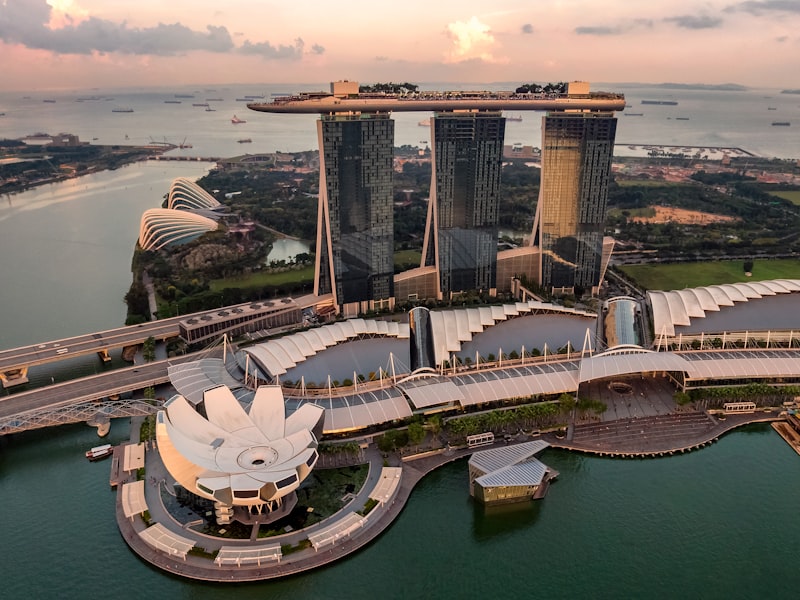
Singapore consistently ranks among the world’s most expensive cities, yet for many foreign professionals the numbers tell a more nuanced story. The cost of living in Singapore for expats in 2026 spans an enormous range , from a frugal SGD 3,000 a month for a single professional eating hawker food and renting a room, to SGD 25,000 or more for a family in a central condominium with children in an international school. What you actually spend depends almost entirely on the housing tier you choose and whether you have school-age children.
This guide sets out real 2026 figures for every major expense category , housing, schooling, healthcare, transport, food and utilities , so that professionals relocating to Singapore can build a realistic budget before they arrive. All amounts are in Singapore dollars (SGD). For a broader overview of what to expect when moving with a family, see our complete guide to relocating to Singapore as a family.
I. Housing: The Single Largest Budget Line
Housing typically consumes 40–60% of an expatriate’s monthly budget in Singapore, making it the single most important variable in any cost estimate. There are two principal rental markets: public housing (HDB flats) and private residential properties (condominiums and landed houses).
HDB Flats
Per the Housing Development Board, foreigners holding a valid Employment Pass, S Pass, Work Permit, EntrePass or Dependant’s Pass may rent entire HDB flats on the open market. As at mid-2026, market rents for whole-unit HDB lettings sit broadly as follows:
- 3-room flat (non-mature estate): SGD 2,200–2,600 per month
- 3-room flat (mature estate, near MRT): SGD 2,800–3,200 per month
- 4-room flat: SGD 3,000–3,800 per month
- 5-room or Executive flat: SGD 3,500–4,500 per month
HDB rents rose sharply between 2021 and 2023 and have since stabilised at elevated levels. For families comfortable with a residential-estate environment rather than a central location, HDB offers significantly better value than private condominiums.
Private Condominiums
Most Employment Pass holders relocating with families gravitate toward private condominiums for the amenities , pool, gym, security , and proximity to international schools. Representative 2026 rents by location:
- Core Central Region (Districts 9, 10, 11 , Orchard, Holland, Bukit Timah): 2-bedroom SGD 5,500–8,000; 3-bedroom SGD 8,000–14,000
- Rest of Central Region (Bishan, Toa Payoh, Novena): 2-bedroom SGD 4,000–6,000; 3-bedroom SGD 5,500–9,000
- Outside Central Region (Jurong, Tampines, Woodlands): 2-bedroom SGD 3,000–4,500; 3-bedroom SGD 4,000–6,000
Landlords are required to declare rental income to the Inland Revenue Authority of Singapore (IRAS); as a tenant this does not affect you directly, but it is worth knowing that all residential lettings are expected to be at arms-length market rents.
II. Singapore International School Fees
If you are relocating with school-age children, Singapore international school fees will be the second-largest cost after housing , and for some families, the larger of the two. Singapore has over 70 international schools catering to curricula from the International Baccalaureate (IB) to British A-Levels, American, Australian, German, French and others. For a detailed comparison of schooling options, see our guide to Singapore schools for expats: international, local and hybrid options.
Annual tuition fees by tier, as at 2026:
- Entry-level international schools: SGD 14,000–22,000 per year
- Mid-tier international schools: SGD 22,000–35,000 per year
- Premium schools (IB, leading British curriculum): SGD 35,000–48,000 per year
Additional one-off costs include a non-refundable application or assessment fee (SGD 500–3,000) and an enrolment fee (SGD 2,000–3,500). School bus services add SGD 500–3,000 per year. On a monthly basis, budget SGD 1,800–4,200 per child in tuition alone. Families with two children in a premium school can easily spend SGD 8,000 per month on school fees before any other expense.
III. Healthcare Costs for Expats
Singapore operates one of Asia’s best healthcare systems, but the costs for expatriates differ substantially from those for citizens and permanent residents. MediShield Life , Singapore’s national health insurance scheme , is available only to Singapore citizens and PRs. Foreign pass holders are not covered and must rely on employer-provided insurance and private plans.
Per the Ministry of Manpower, employers of Work Permit holders are legally required to provide medical insurance of at least SGD 60,000 per year for inpatient care and day surgery. Employment Pass holders carry no equivalent statutory mandate , their coverage is typically negotiated as part of the employment package.
Typical out-of-pocket healthcare costs in Singapore in 2026:
- GP consultation at a private clinic: SGD 40–120
- Specialist consultation: SGD 120–300
- Private hospitalisation (non-insured, per night): SGD 600–2,500 depending on ward class
- Individual private health insurance (comprehensive, mid-tier plan): SGD 3,000–8,000 per year
- Family health insurance (2 adults, 2 children): SGD 10,000–20,000 per year
Medical inflation in Singapore was estimated at approximately 14% for 2026, so premiums have risen year-on-year. Budget for health insurance as a non-negotiable line item.
IV. Transport Costs
Singapore’s MRT and bus network is one of the most efficient in Asia. A monthly adult transit card costs approximately SGD 120–180 for a typical commuter depending on distances travelled. Taxis and private-hire vehicles (Grab, Gojek) are convenient but add up: a short cross-town ride can cost SGD 12–25, while airport transfers run SGD 30–60.
Owning a car in Singapore is significantly more expensive than in most other countries. The Certificate of Entitlement (COE) , which must be bid for before purchasing a vehicle , costs SGD 80,000–110,000 (as at early-to-mid 2026 depending on category) on top of the vehicle price, import duties, registration fees and road tax. Total cost of car ownership for a mid-range saloon over ten years can approach SGD 300,000. Most expats on a mid-range budget rely on public transport and ride-hailing for daily use and rent a car only when needed.
V. Food and Groceries
Food is where Singapore’s cost of living rewards those willing to adapt. The island’s hawker centre culture means a fresh, cooked-to-order meal costs SGD 4–8 per person at hundreds of government-run centres and coffee shops (kopitiams) , among the most affordable hot food of any major global financial centre. A monthly hawker food budget of SGD 400–600 for a single professional is realistic for three meals a day.
Grocery costs vary by where you shop:
- Supermarkets (NTUC FairPrice, Sheng Siong): budget SGD 300–500 per month for a single person, SGD 600–900 for a family of four
- Premium / western-oriented supermarkets (Cold Storage, Jason’s, RedMart): 30–50% more
- Specialty imported goods (European cheese, wine, craft beer): notably more expensive than in Europe or North America
Eating out at casual restaurants costs SGD 15–30 per person; fine dining runs SGD 80–250 per person. A family dining out regularly at mid-range restaurants should budget SGD 1,500–3,000 per month for food outside the home.
VI. Utilities and Telecoms
Utility costs in Singapore are higher than in many countries. Monthly electricity, water and gas for a typical 3-bedroom private condominium unit runs SGD 250–450 depending on air-conditioning usage , and given Singapore’s year-round tropical heat, air-conditioning is not optional for most households. A mobile phone plan with data costs SGD 20–60 per month; home broadband is SGD 30–60 per month.
VII. Summary Budget Tables by Lifestyle Tier
The table below shows typical total monthly budgets for a single professional and a family of four across three lifestyle tiers. These are indicative figures for mid-2026 and assume a private condominium for the family scenarios.
Single professional (no children)
- Budget (HDB room, hawker food): SGD 2,800–3,500
- Mid-range (CCR condo studio, mixed eating): SGD 6,000–9,000
- Comfortable (OCR 2-bed condo, dining out regularly): SGD 8,000–12,000
Family of four (two school-age children in international school)
- Entry-level (OCR 3-bed condo, entry-tier school): SGD 14,000–18,000
- Mid-range (RCR 3-bed condo, mid-tier school): SGD 18,000–24,000
- Premium (CCR 4-bed condo, premium school): SGD 28,000–40,000
VIII. Singapore Expat Living Costs: Key Planning Considerations
When budgeting for Singapore expat living costs, three factors most commonly catch newcomers off-guard. First, the security deposit on private rentals is typically two months’ rent for a two-year lease , a significant upfront cash requirement on a SGD 6,000 apartment. Second, international school application timelines are long; some popular schools require applications 12–18 months in advance, and waitlists are common for mid-year entry. Third, health insurance premiums tend to increase at renewal, and securing coverage before arriving is advisable.
Understanding your pass type also matters for budgeting. The qualifying salary for a new Employment Pass is SGD 5,600 per month for most sectors and SGD 6,200 for financial services as at 1 July 2026 , these floors are well below what a comfortable single-professional lifestyle actually requires. Our complete Singapore Employment Pass guide sets out the full salary framework and COMPASS requirements. If you are relocating with a spouse and children, our guide to the Dependant’s Pass and LTVP explains the pass types available to family members and their work-right implications.
IX. Next Steps
Singapore’s cost of living is high relative to most Asian cities, but it is structured , and once you understand where the big-ticket items fall, a workable budget is straightforward to build. Housing and schooling account for the lion’s share; food, transport and utilities are surprisingly manageable by global standards.
If you are planning a relocation and need guidance on work passes for yourself or your organisation, the team at Singapore Employment Agency , the consumer brand of Little Big Employment Agency Pte Ltd (Licence 19C9790) , provides end-to-end Employment Pass, S Pass and Dependant’s Pass services. For incorporation, accounting and corporate secretarial support for your business in Singapore, visit Raffles Corporate Services.
, The Editorial Team, Little Big Employment Agency
Real people. Right here in Singapore.